domingo, 30 de marzo de 2014


Demographics

The land area of the contiguous United States is 2,959,064 square miles (7,663,941 km2). Alaska,
separated from the contiguous United States by Canada, is the largest state at
663,268 square miles (1,717,856 km2). Hawaii, occupying an
archipelago in the central Pacific, southwest of North America, is 10,931 square miles (28,311 km2)
in area.
The United States is the world's third or fourth largest nation by total area (land and water), ranking behind Russia and Canada and just above or belowChina. The ranking varies depending on how two territories disputed by China and India are counted and how the total size of the United States is measured: calculations range from 3,676,486 square miles (9,522,055 km2) to 3,717,813 square miles (9,629,091 km2)
The United States is the world's third or fourth largest nation by total area (land and water), ranking behind Russia and Canada and just above or belowChina. The ranking varies depending on how two territories disputed by China and India are counted and how the total size of the United States is measured: calculations range from 3,676,486 square miles (9,522,055 km2) to 3,717,813 square miles (9,629,091 km2)
to 3,794,101 square miles (9,826,676 km2) Measured by only land area, the United States is third in size
behind Russia and China, just ahead of Canada.
The coastal plain of the Atlantic seaboard gives way further inland to deciduous forests and the rolling hills of the Piedmont. The Appalachian
Mountainsdivide the eastern seaboard from
the Great Lakes and the grasslands of the Midwest. The Mississippi–Missouri
River, the world's fourth longest river system, runs mainly north–south through the heart of the country. The flat,
fertile prairie of the Great Plains stretches to the west, interrupted by a highland region in
the southeast.
The U.S. Census Bureau estimates the country's population now
to be 317,785,000,] including an approximate 11.2 million illegal immigrants The U.S. population almost quadrupled
during the 20th century, from about 76 million in 1900.] The third most populous nation in the
world, after China and India, the United States
is the only major industrialized nation in which large population increases are
projected.
With a birth rate of
13 per 1,000, 35% below the world average, its population
growth rate is
positive at 0.9%, significantly higher than those of many developed nations. In fiscal year 2012, over one million immigrants (most of whom entered through family reunification) were granted legal residence. Mexico has been the leading source of new
residents since the 1965 Immigration Act. China, India, and the Philippines have been in the top four sending
countries every year. Nine
million Americans identify themselves as homosexual, bisexual, or transgender.] A 2010 survey found that seven percent
of men and eight percent of women identified themselves as gay, lesbian, or
bisexual.

The United States has
a very diverse population—31 ancestry groups have more than one million members. White
Americans are the
largest racial group; German
Americans, Irish
Americans, and English
Americans constitute
three of the country's four largest ancestry groups. Black
Americans are the
nation's largest racial
minority and third
largest ancestry group. Asian Americans are the country's second largest
racial minority; the three largest Asian American ethnic groups are Chinese Americans, Filipino
Americans, and Indian
Americans.
In 2010, the U.S.
population included an estimated 5.2 million people with some American Indian or Alaska Nativeancestry
(2.9 million exclusively of such ancestry) and 1.2 million with some native
Hawaiian or Pacific
island ancestry (0.5
million exclusively). The census
counted more than 19 million people of "Some Other Race" who were
"unable to identify with any" of its five official race categories in
2010.

Introducing USA!
The United States of America (USA)—commonly referred to as the United States (U.S.), America or simply the States—is a federal republic consisting of 50 states and a federal district. The 48 contiguous states and the federal district of Washington, D.C., are in centralNorth America between Canada and Mexico. The state of Alaska is the northwestern part of North America and the state of Hawaii is an archipelagoin the mid-Pacific. The country also has five populated and nine unpopulated territories in the Pacific and the Caribbean. At 3.79 million square miles (9.83 million km) in total and with around 317 million people, the United States is the fourth-largest country by total area and third largest bypopulation. It is one of the world's most ethnically diverse and multicultural nations, the product of large-scale immigration from many countries.The geography and climate of the United States is also extremely diverse, and it is home to a wide variety of wildlife.

domingo, 23 de marzo de 2014
Canada
Here we go Canada!
Is a country in North America consisting of 10 provinces and 3 territories. Lets start with interesting facts about Canada:
1.Canada is also home to the longest street in the world. Yonge Street in Ontario starts at Lake Ontario, and runs north through Ontario to the Minnesota border, a distance of almost 2000 kilometres.
2. A bear cub named Winnipeg was exported from Canada to the London Zoo in 1915. A little boy named Christopher Robin Milne loved to visit Winnipeg (or Winnie for short) and his love for the bear cub inspired the stories written by his father, A.A. Milne, about Winnie-the-Pooh.
 It’s thanks to a little bear from Canada called Winnipeg that A.A. Milne invented Winnie-the-Pooh for his son Christopher.
3. The Blackberry Smartphone was developed in Ontario, at Research In Motion’s Waterloo offices.

4. Canada holds the record for the most gold medals ever won at the Winter Olympics, since taking 14 Golds at the 2010 Vancouver Winter Olympics.
5. Montreal is home to many beautiful churches and is often called The City of Saints or City of a hundred bell towers.
6. Canada has over 30000 lakes.
7. Ontario is believed to be home to the world’s smallest jail, which measures only 24.3 sq metres.
8. Canada is the second largest country in the world by total area (Russia is the largest).
9. The 2 main languages spoken in Canada are English and French.
10.The Hotel de Glace in Quebec is built every year
using 400 tons of ice and 12 000 tons of snow.
Every summer it melts away and every winter it is rebuilt.


Facts and Statistics
Location: Northern North America, bordering the North Atlantic Ocean on the east, North Pacific Ocean on the west, and the Arctic Ocean on the north, north of the conterminous US
Capital: Ottawa
Climate: varies from temperate in south to subarctic and arctic in north
Population: 33,212,696 (July 2008 est.)
Ethnic Make-up: British Isles origin 28%, French origin 23%, other European 15%, Amerindian 2%, other, mostly Asian, African, Arab 6%, mixed background 26%Religions: Roman Catholic 42.6%, Protestant 23.3% (including United Church 9.5%, Anglican 6.8%, Baptist 2.4%, Lutheran 2%), other Christian 4.4%, Muslim 1.9%, other and unspecified 11.8%, none 16% (2001 census)
Government: constitutional monarchy that is also a parliamentary democracy and a federation
Customs and Etiquette in Canada
Meeting and Greeting
- The most common greeting is the handshake.
- It should be firm and accompanied by direct eye contact and a sincere smile.
- Wait until invited before using someone's first name although Canadians tend to move to a first-name basis rapidly.
- French Canadian friends may greet each other by lightly kissing on the cheeks (once on the left cheek and once on the right).
- If using French in Quebec always use the formal pronoun "vous" (you) when speaking to someone and do not switch to the informal "tu" unless invited to do so.
Gift Giving
- In general, Canadians give gifts for birthdays and Christmas.
- If invited to someone's home for dinner, take a box of good chocolates, flowers or a bottle of wine.
- In Quebec, sending flowers in advance of the dinner party is proper protocol.
- In Quebec, if you give wine, make sure it is of the highest quality you can afford.
- Do not give white lilies as they are used at funerals.
- Do not give cash or money as a present.
- Gifts are usually opened when received.
Dining Etiquette
- Table manners are relatively relaxed and informal in Canada.
- Quebec does see a little more formality.
- Table manners are generally Continental, i.e. the fork is held in the left hand and the knife in the right while eating.
- Wait to be shown to your seat.
- Do not begin eating until the hostess starts.
- Do not rest your elbows on the table.
- Feel free to refuse individual foods or drink without offering an explanation.
- Leaving a small amount at the end of the meal is generally acceptable.
- In formal situations, the host gives the first toast. An honoured guest should return the toast later in the meal. Women may give toasts.
Top 10 Canadian Foods!?
Ten foods from Canada that can’t be missed.
PoutineA list of the top 10 Canadian foods wouldn’t be complete without acknowledging the most popular, and possibly the least nutritious, Canadian dish out there – poutine, a Quebec staple that’s a melange of greasy thick-cut fries, squeaky cheese curds and warm peppery gravy. 
Tim Horton’s iced capYou know summer has arrived when you see Canadians across the country clutching their frosty, creamy Tim Horton’s iced caps, a blend of Tim’s signature coffee, cream (or milk), and ice.
Beav TailserA whole wheat pastry is flattened to resemble a beaver tail (how patriotic!) and is cooked by “floating” on top of hot oil. Then they remove it, slather it with butter, and add your favourite toppings (the classic is sweet cinnamon sugar).
TourtiereTourtiere, which is a Christmas dinner staple on the tables’ of Quebeckers, is a meat pie often made with ground pork, veal or beef.
Labatt BlueIt may seem strange to have a beer on a top 10 Canadian foods’ list, but when suds are their own food group in a country, you can’t deny acknowledging Canada’s favourite local brew.
Maple syrupSure, maple syrup may be in pantries across the globe, but this yummy concoction was first discovered and used by Native Americans in north-eastern North America, so Canadians will gladly take credit for making maple syrup a sweet staple.

May West
The Canadian version of the Twinkie, a May West consists of a round cake with a creamy center enrobed in chocolate. Can’t get much better than that!
Dill pickle chips
Americans eat ranch. In England, they snack on roasted chicken flavoured chips -- and Canadians love their tangy home-grown dill pickle chips.
Nanaimo barsNamed after the city in BC, Nanaimo bars have layers upon layers of sugary goodness – first, a thick crumb crust, then a layer of vanilla frosting or custard, and then it’s topped with melted chocolate.
Smoked meatSmoked meat originated in Jewish delis in Montreal, and it became so popular that the city became known for its coveted smoked meat sandwiches (served warm, on rye bread, with a bit of mustard and a dill pickle on the side).

Ireland !!
Ireland??
Is an island in the Atlantic off the north-western coast of mainland Europe. It is the third-largest island in Europe and the twentieth-largest island on Earth. To its east is the island of Great Britain, from which it is separated by the Irish Sea and North Channel.

Politically, Ireland is divided between the Republic of Ireland, which covers five-sixths of the island, and Northern Ireland, a part of the United Kingdom, which covers the remaining area and is located in the north-east of the island. The population of Ireland is about 6.4 million. Just under 4.6 million live in the Republic of Ireland and just over 1.8 million live in Northern Ireland.
Places of Interest

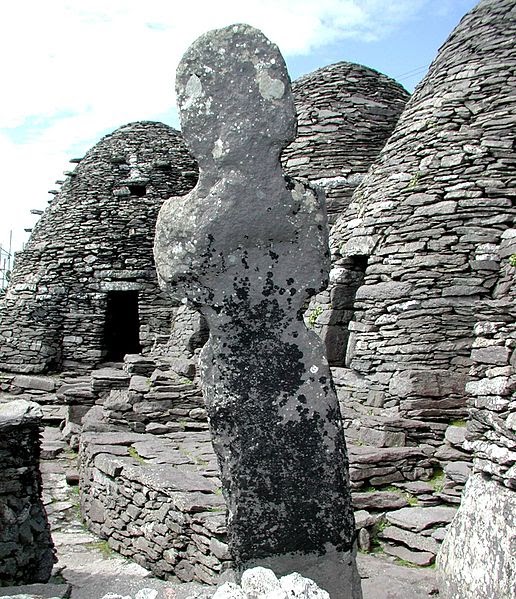


Is an island in the Atlantic off the north-western coast of mainland Europe. It is the third-largest island in Europe and the twentieth-largest island on Earth. To its east is the island of Great Britain, from which it is separated by the Irish Sea and North Channel.
Politically, Ireland is divided between the Republic of Ireland, which covers five-sixths of the island, and Northern Ireland, a part of the United Kingdom, which covers the remaining area and is located in the north-east of the island. The population of Ireland is about 6.4 million. Just under 4.6 million live in the Republic of Ireland and just over 1.8 million live in Northern Ireland.
Places of Interest
Brú na Bóinne, County Meath
Demography
People have lived in Ireland for over 9,000 years, although only a limited amount is known about the palaeolithic, neolithic and Bronze Age inhabitants of the island. Early historical and genealogical records note the existence of dozens of different peoples that may or may not be mythological, for example the Cruithne, Attacotti, Conmaicne, Eóganachta, Érainn, and Soghain, to name but a few. Over the past 1000 years or so, Vikings, Normans, Scots and English have all added to the Gaelic population and have had significant influences on Irish culture.
Economy
Despite the two jurisdictions using two distinct currencies (the euro and pound sterling), a growing amount of commercial activity is carried out on an all-island basis. This has been facilitated by the two jurisdictions' shared membership of the European Union, and there have been calls from members of the business community and policymakers for the creation of an "all-island economy" to take advantage of economies of scale and boost competitiveness.
Awesome pictures!
This is me last week (;
Suscribirse a:
Entradas (Atom)