domingo, 18 de mayo de 2014

Australia

Australia

Flag

When the Australian colonies federated to form the Commonwealth of Australia on 1 January 1901, the British flag had been the official flag for more than 100 years. The birth of a new nation created the opportunity to develop an emblem that represented Australia alone. An official competition for a design attracted 32 823 entries. Five of these, which contained almost identical designs, were placed equal first. Apart from later changes in the sizes of the stars and the number of points, these joint winners had produced the present Australian flag.


National colours

Green and gold were proclaimed Australia’s national colours by the Governor-General on 19 April 1984. Before the proclamation Australia had no official colours, although three colour combinations traditionally had a claim to be Australia’s national colours: red, white and blue; blue and gold; and green and gold.


National Anthem
‘Advance Australia Fair’ is the national anthem of Australia. A revised version of a late nineteenth century patriotic song, it was officially declared the national anthem on 19 April 1984.

Advance Australia Fair

Australians all let us rejoice,
For we are young and free;
We’ve golden soil and wealth for toil;
Our home is girt by sea;
Our land abounds in nature’s gifts
Of beauty rich and rare;
In history’s page, let every stage
Advance Australia Fair.
In joyful strains then let us sing,
Advance Australia Fair.
Beneath our radiant Southern Cross
We’ll toil with hearts and hands;
To make this Commonwealth of ours
Renowned of all the lands;
For those who’ve come across the seas
We’ve boundless plains to share;
With courage let us all combine
To Advance Australia Fair.


Australia's system of government

Australia’s system of government is founded in the liberal democratic tradition. Based on the values of religious tolerance, freedom of speech and association, and the rule of law, Australia’s institutions and practices of government reflect British and North American models. At the same time, they are uniquely Australian.


Culture
 
Australia is a product of a unique blend of established traditions and new influences. The country’s original inhabitants, the Aboriginal and Torres Strait Islander peoples, are the custodians of one of the world’s oldest continuing cultural traditions. They have been living in Australia for at least 40 000 years and possibly up to 60 000 years.
Today Australia has a population of nearly 23 million people. At 2009, abou 25.6 per cent of the estimated resident population comprised those born overseas. Australian Bureau of Statistics projections from the 2006 census of the numbers of Aboriginal and Torres Strait Islander people suggest and Indigenous population of 575,552 people at 30 June 2011.
 
 
Shared values
The defining feature of today’s Australia is not only the cultural diversity of its people, but the extent to which they are united by an overriding and unifying commitment to Australia.
At the same time, everyone is expected to uphold the principles and shared values that support Australia’s way of life. These include:
  • respect for equal worth, dignity and freedom of the individual
  • freedom of speech and association
  • freedom of religion and a secular government
  • support for parliamentary democracy and the rule of law
  • equality under the law
  • equality of men and women
  • equality of opportunity
  • peacefulness
  • a spirit of egalitarianism that embraces tolerance, mutual respect, and compassion for those in need. Australia also holds firmly to the belief that no one should be disadvantaged on the basis of their country of birth, cultural heritage, language, gender or religious belief.


Sports
The 10 most popular physical activities were walking, aerobics/fitness, swimming, cycling, tennis, golf, running, bushwalking, football (often referred to as soccer in Australia) and netball. Other popular sporting activities include Australian football, rugby, hockey, basketball, baseball, car racing, horse racing, sailing and snow skiing.


Celebrations and holidays

Most workers in Australia have around 12 national and state public holidays throughout the year, in addition to their annual holidays. These include:
  • New Year’s Day, which is on 1 January every year. The most common time for people in Australia to take their annual leave is between mid-December and the end of January.
  • Christmas and Easter, two of the most important dates in the Christian calendar. Christmas Day is on 25 December every year, while Easter is observed at some point between late March and late April each year.
  • Boxing Day, the day after Christmas Day, is also a public holiday.
  • Australia Day, on 26 January, is the day Australians celebrate the founding of the first European settlement in Australia in 1788.
  • Anzac Day, on 25 April, is the day the Australian and New Zealand Army Corps (Anzac) landed at Gallipoli in Turkey in 1915 during World War I. This day is set aside in memory of those who fought for Australia and those who lost their lives in war. The day is a national public holiday and is commemorated with ceremonies, the laying of wreaths and military parades.


Facts

  • More than 6.5 million migrants have settled in Australia since 1945. English is the national language but other languages are valued.
  • Australia is predominantly Christian but people are free to practise any religion they choose.
  • Around 88 per cent of Australians go to at least one cultural event each year. More than 11 million Australians aged 15 or over take part in sport or other physical activity.
  • Australia has one of the most diverse cuisines in the world but has no national dish.


sábado, 10 de mayo de 2014

Japon

Japan... (;


The Culture !!

Japanese culture is rich and diverse, dating back to 10,000BC when the Jomon people first settled in Japan. It is widely known for its traditional arts as well as its contemporary pop culture. Today in Japan it is still possible to see kimono-clad women shuffling down the street with umbrellas overhead, or oversized sumo wrestlers battling it out the ring. A sophisticated cuisine, unique social customs, and refined performing and visual arts also contribute to a culture which has become attractive, and sometimes fashionable, to many foreigners.
 

Japanese Painting


Japanese painting has had a rich history. Many of today's Japanese painters work in styles that are heavily influenced by popular culture and anime. The most popular and well-known of these contemporary painters is probably Takashi Murakami. He is part of a studio collective, which is called Kaikai Kiki. His work focuses on Japanese society in the post-war period. One of the intentions of his art is to blur the lines that separate fine art from its commercial counterpart.

Religion


Today many religions are practiced in Japan, but most Japanese follow a meld of Shintoism and Buddhism. Although religion does not play a major role in the everyday life of the average Japanese, they do have customs and rituals that are observed on special occasions like birthdays, weddings, funerals, and religious holidays.
Understanding the relationship between Buddhism and Shintoism can be confusing for foreigners. A common saying in Japan is, "We live as Shintoists, but die as Buddhists."
Japanese Tea Ceremony
 

 Japanese tea ceremony is a ritual that is heavily-influenced by the teachings of Zen Buddhism. There are two types of the tea gatherings with Ochakai being the simpler form of ceremony. It usually includes a service of confections, usucha (thin tea), and ten shin (light meal). Chaji is the more formal of the two ceremonies. It includes kaiseki (full-course meal), the service of confections, koicha (thick tea), and the thin tea. The chaji tea ceremony can last more than four hours. 

Japanese Incense Ceremony

 The Japanese incense ceremony known as kodo is an art form that has been refined over the centuries. To properly perform kodo, it takes many years of practice and study. It is said that it actually takes thirty years of study to master the art. One can participate in the ceremonies and games of an experienced master in multiple cultural centers and department stores around the country of Japan. One can also learn to play the simpler games at home with friends. The kodo ceremony provides an elegant experience that cannot be found outside Japan. It is an activity that tests the senses. Though kodo sets can be purchased on the Internet, it takes an enormous deal of patience to become a true practitioner of the art.


Traditonal Music
 

Traditional Japanese music usually refers to Japan's historical folk music. One of the defining characteristics of traditional Japanese music is its sparse rhythm. Regular chords are also absent. It is impossible for a person to beat time to the music. All of the rhythms are ma-based, and silence is an important part of the songs. The focus is on creating music that flows in an attempt to mirror the behavior of nature. It is regular for songs to start off at an extremely slow pace and to pick up speed as they progress. Then, they get slow again before transitioning into long and drawn out finishes.
Traditional Clothing
 

One of the most popular garments of traditional Japanese clothing is the kimono, which is worn by both men and women. Unlike the kimono that is worn by women, men's kimonos are much simpler and usually include only five pieces, not counting footwear. A few inches of the sleeves are left unattached at the bottom of the sleeves. The sleeves are also not nearly as deep as the sleeves of the women's kimonos. This is to make room for the obi that goes around the man's waist directly underneath the sleeves. On the woman's kimono, sleeves are able to hang on top of the obi and not interfere.
 
clothing hakamaHakama
                                                                                         

KimonoKimono


clothing happiHappi


Etiquette in Japan


obama bowing way too low
   Many Americans felt US President Obama bowed too low when he met Emperor Akihito.
When entering a house, the guest must replace his shoes with slippers. The slippers are given to the guest by his host at the genkan (doorway). These slippers are taken off in rooms that are floored with tatami. It is rude for anyone to walk on tatami floors wearing anything other than socks or bare feet. There are even slippers that are exclusively worn in the washroom. The person leaves his house slippers outside the washroom door and wears the special footwear that is exclusively for bathroom use.
 
When greeting someone, it is customary to bow. These bows vary in effort, but if one is standing on a tatami floor, it is expected for him to get down on his knees while performing the bow. The longer and deeper the bow is, the more respect it conveys to the other person. People who hold higher social statuses expect others to greet them with long bows. Not doing so can result in social snafus. By the same logic, a smaller nod of the head is used for more casual or informal meetings.

Food !!!


Sushi is a dish of rice cooked with vinegar topped with seafood (often uncooked) or made into rolls. When raw fish is sliced and served alone, it is known as sashimi. When sushi is rolled around or inside of nori (seaweed), it is called makizushi. Inarizushi is when rice is packed into a fried tofu pouch, although many do not consider this an actual type of sushi. And, chirashi-zushi is sushi rice served in a bowl with scattered seafood on top. Many Japanese complain when they travel abroad that the quality of sushi is extremely low compared to Japanese standards.


Sport:
           Sumo


Sumo is known throughout the world as one of the most unique and exciting full-contact sports in existence. Sumo wrestling is a match of two large men facing off in a circular ring (dohyō). The man who can force the other out of the circle is the victor. A wrestler can also win by making his opponent touch the ground with any part of his body other than the bottoms of his feet. Japan, the country that created the sport of sumo wrestling, is the only country that supports professional matches. Sumo is considered by most to be one of the gendai budo (modern Japanese martial art), but the long history of the sport means that that classification is not correct.


domingo, 6 de abril de 2014

Las Vegas !!


A desert metropolis built on gambling, vice and other forms of entertainment, in just a century of existence Las Vegas has drawn millions of visitors and trillions of dollars in wealth to southern Nevada.


The city was founded by ranchers and railroad workers but quickly found that its greatest asset was not its springs but its casinos. Las Vegas’s embrace of Old West-style freedoms—gambling and prostitution—provided a perfect home for East Coast organized crime.


Las Vegas in 1920
 
Beginning in the 1940s, money from drugs and racketeering built casinos and was laundered within them. Visitors came to partake in what the casinos offered: low-cost luxury and the thrill of fantasies fulfilled.
 

Most popular - USA SPORTS


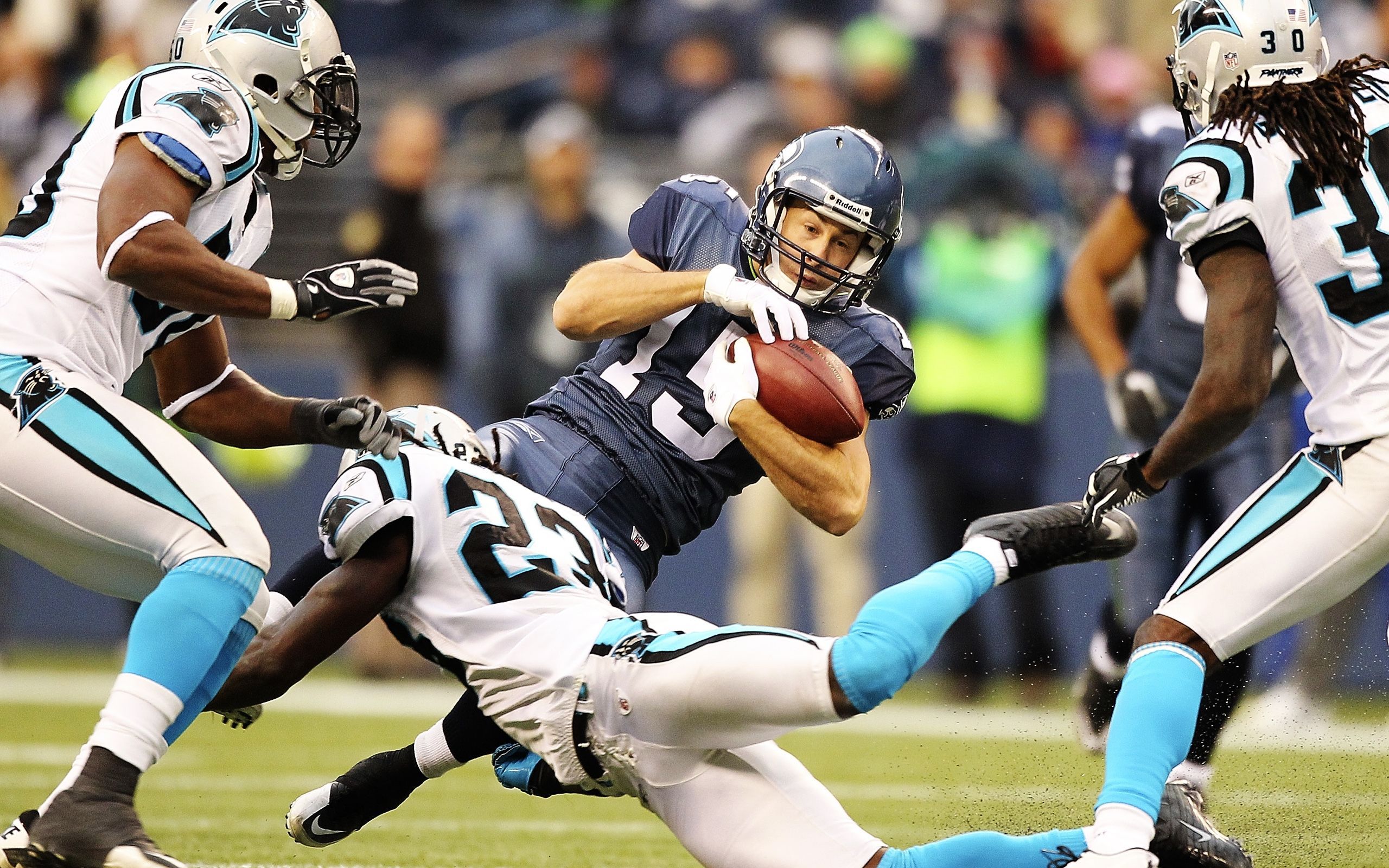
  • American Football
  • Basketball
  • Baseball
  • Ice Hockey
  • Soccer
  • Volleyball
  • Lacrosse
  • Rugby Union
  • Water Polo
  • Cricket 
  • Tennis
  • Golf
  • Boxing
  • Surfing
  • Track and Field 
  • NASCAR
  • Motor